



LACOE'S UPDATED PLAN
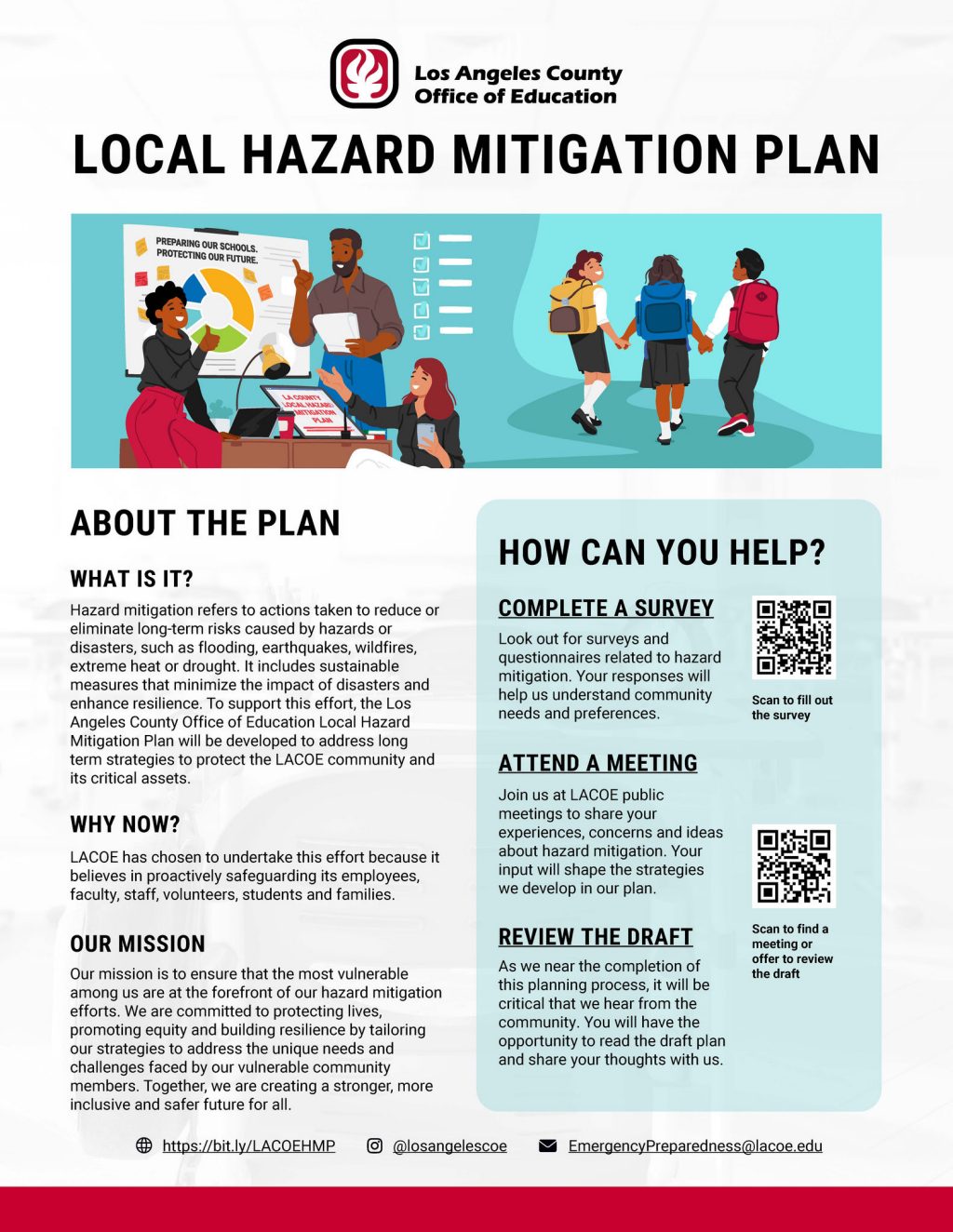
LACOE is in the process of updating its Local Hazard Mitigation Plan, a critical roadmap for reducing risks from disasters such as earthquakes, wildfires, floods and extreme heat. This plan will strengthen the resilience of our schools, staff and students while ensuring access to state and federal funding for mitigation projects.
For LACOE, this plan is part of its commitment to:
- Protect students, staff and facilities within Los Angeles County
- Ensure continuity of education services during and after emergencies
- Provide access to federal and state mitigation funding
- Promote collaboration with schools, districts and partners

WHAT IS MITIGATION?
In emergency management, mitigation is the ongoing, sustained effort to reduce or eliminate the long-term risk to people and property from hazards and their effects. It involves actions to prevent an emergency, reduce the chance of it happening or lessen its damaging effects when it cannot be prevented. Examples include implementing stricter building codes to withstand earthquakes, creating land-use plans that prohibit building in floodplains and engineering infrastructure to be more resilient.
Key aspects of mitigation:
- Long-term focus: Mitigation is about long-term solutions, not immediate responses to an ongoing disaster.
- Risk reduction: Its goal is to reduce the long-term impact of natural hazards on communities.
- Proactive measures: It includes proactive actions such as building codes, land-use planning, and infrastructure improvements.
- Complementary to prevention: While prevention tries to stop an event from occurring, mitigation helps lessen the damage if an event happens, especially when it cannot be prevented.
- Cost-effectiveness: A key component of modern mitigation is ensuring actions are "costeffective," meaning the cost of the mitigation project is less than the long-term costs of disaster recovery and repair it prevents.
WHAT IS A LOCAL HAZARD MITIGATION PLAN?
A Local Hazard Mitigation Plan is a document that identifies potential hazards, evaluates risks and outlines long-term strategies to reduce the impacts of disasters. Many cities, counties and public agencies develop these plans to better understand their vulnerabilities and strengthen community resilience. Although special districts like LACOE are not required to create an LHMP, LACOE has chosen to undertake this effort because it believes in proactively safeguarding its employees, faculty, staff, volunteers, students and families. By completing this plan, LACOE is taking meaningful steps to reduce future risks and support a safer learning environment for the entire community.
HOW CAN YOU GET INVOLVED?
Your input matters! LACOE is committed to building an inclusive plan that represents the needs of our diverse communities. Educators, district staff, families, emergency responders and community members are all asked to take part in this process. Click on the icons on the right to complete our survey or email us to be notified of the opportunity to review the draft plan.

Complete our Public Review Comment Survey
CONTACT US
The LACOE Local Hazard Mitigation Planning Steering Committee meets regularly to work on the updated LHMP. For further information on the committee and its activities, contact:
Jema Estrella
(562) 803-8457
Estrella_Jema@lacoe.edu


