



Overview
The Los Angeles County Academic Decathlon (LACAD) is a colorful, rigorous scholastic team competition that tests the knowledge and skills of high school students who compete against other school teams for gold, silver and bronze medals.
Decathletes are challenged to use analytical skills, performance abilities and test-taking and writing aptitude in 10 events: Art, Economics, Essay, Interview, Language & Literature, Math, Music, Science, Social Science and Speech.
2027 Competition
Theme: Journeys of Transformation: An Exploration of Travel and Transport
The Los Angeles County Academic Decathlon is a local-county competition designed to promote self-assurance, academic enrichment and teamwork. The winners of the county participate in the State competition and then if they win at state, they participate nationally. Students of all achievement levels from all over the county participate in the highly anticipated three-day event. Teams are comprised of students from all grade-point averages — Honors, Scholastic and Varsity. Decathletes are challenged to use analytical skills, performance abilities and writing aptitude in seven knowledge tests (Art, Economics, Literature, Math, Music, Science and Social Science) as well as Interview, Speech, Essay and Super Quiz.
This section contains the information the decathlon coach needs to participate in the Los Angeles County Academic Decathlon.
New Team Form
Looking to start a new team for your school? Fill out our New Team Form
Intent to Participate
To participate in the 2026-27 Academic Decathlon, please fill out the Intent to Participate form and submit by Sunday, September 20, 2026 by 5 p.m.
Participation Rules
Participating in the competition and completing all the necessary steps may seem daunting but necessary. Please come back soon for a list of deadlines that must be completed to participate in the Academic Decathlon.
2026-27 Academic Decathlon will be announced soon. Check back soon for updates.
General Information
The Academic Decathlon competition is comprised of ten events. There are seven multiple-choice exams—one in each of the following subject areas: Art, Economics, Language and Literature, Mathematics, Music, Social Science and Science. Students will also take an Essay exam and will be judged in a Speech event as well as an Interview event.
The multiple-choice exams in Art, Economics, Language and Literature, Music, Social Science, and Science each have 50 questions. The Math exam has 35 questions. The Super Quiz has 14 questions per student. Students will be given 30 minutes to complete each of the written multiple-choice exams. Students will have 50 minutes to complete the Essay exam.
The Team
A team consists of nine full-time students from the ninth through twelfth grades of the same high school; or, if there is no ninth grade, a team consists of nine full-time students from the tenth through twelfth grades of the same high school. A full-time student is defined as a student who is enrolled in four or more class periods per day. Each team is made up of three Honor students, three Scholastic students, and three Varsity students in accordance with the following grade point average definitions:
Category and GPA will be updated for 2026-27, please check back soon.
Contestants may compete in a higher division than their own grade point average category but not in a lower division. The Academic Decathlon requires participants to prepare for ten academic events. The Academic Decathlon does not permit participants to specialize but rather encourages academic versatility. Changes to the team roster, after the deadline, are not allowed. Under no circumstances will changes be allowed on or after the date of the first event. Each team member is eligible for individual medals in all ten events. Only six scores count for the final team standing in the competition—the top two Honor scores, the top two Scholastic scores, and the top two Varsity scores. Therefore, schools may enter with fewer than nine members and still be eligible for team awards as long as there are at least two Honor, two Scholastic, and two Varsity members.
Based on space and availability, schools are welcome to enter a complete second team in the Junior Division. Teams in the Junior Division will not be competing for a seat in the State Competition. The purpose of the Junior Division is to allow students to gain experience. It is then based on the date LACAD receives completed participation packet. The nine students who attend the State Competition must be the same nine students who participated in and won the County competition. In the case of an “extreme medical emergency”, LACAD may allow another student to replace the absent team member. The Los Angeles County Academic Decathlon organization has the full authority to declare the first-place team ineligible to attend the State Competition in accordance with the rules and practices of its organization and may send the second-place team to represent its county. In such cases, the decision of the LACAD organization is final.
Eligibility
Each high school must submit official transcripts to verify eligibility of team members. The school certification of transcripts will be the final indication of a student’s eligibility and GPA category. The LACAD Coordinator shall check the GPA computation in accordance with the guidelines and verify eligibility of each team member. The team coach shall be notified of any discrepancies. Foreign students are eligible to participate in the Academic Decathlon. A foreign student who does not possess a valid transcript may participate in the Honors category. If a coach wishes to qualify a foreign student for the Scholastic or Varsity categories, the coach must provide adequate evidence that the student performed at a relative B or C status within the foreign system during the two years prior to participation in the Decathlon. The LACAD Coordinator has final authority regarding the participation and classification of foreign students. Participation in the L.A. County Academic Decathlon is voluntary and is open to all students regardless of race, creed, color, sex, sexual orientation, religion, national origin, disability or handicap.
Computation of Grade Point Averages
The “focus semesters” for GPA computation go back two years prior to the present grade level of the contestant. If the contestant is a twelfth grader in September of the competition year, then the semesters that are used for GPA computation are all of the tenth grade, all of the eleventh grade, and the summer sessions between tenth and eleventh grades and between eleventh and twelfth grades. Likewise, if the contestant is a tenth grader in the fall, the focus period for GPA computations includes all of the eighth grade, all of the ninth grade, and the summer sessions between eighth and ninth grades and between ninth and tenth grades. This same “two year rule” applies to all students. Regardless of the system used to determine a GPA locally, these criteria must be followed to ensure uniformity and equity among all participants.
Grades for courses shall be used in GPA computations for Academic Decathlon competition purposes if the nature of the course is based on theoretical skills and the assessments are objective in nature. Grades for courses that directly deal with the theoretical content covered in the Academic Decathlon curriculum and competitive events should be included in GPA computations. However, a grade for a course focused specifically on the Academic Decathlon should NOT be included in GPA computations.
Grades for courses shall NOT be used in GPA computations for Academic Decathlon competition purposes if the nature of the course is performance-based. The skills that are developed in these courses tend to be more technical/vocational or hands-on, and the majority of a student’s grade in these courses is performance-based and/or is subjective in nature.
Inquiries regarding borderline courses should be referred to the LACAD Coordinator, who will make the determination based on the academic nature of the course, and who will then implement the decision uniformly throughout the county. The decision of the Academic Decathlon organization with regard to which course grades are applied to the Academic Decathlon GPA tabulation is final.
For all alpha grades, all A’s will count as 4.0, all B’s will count as 3.0, all C’s will count as 2.0, and all D’s will count as 1.0. Anything below D will count as 0 points. When numerical grades appear on the transcript in place of alpha grades, they shall be converted to alpha grades according to the official conversion scale that appears on the school’s official transcript or in the school’s official profile. If a student receives a Fail in any academic course, the F is counted in averaging the student’s grades even though no credit is given. When a course has been failed prior to the focus period for which the GPA is being computed but repeated during that period, only the repeat grade is counted. When a course is failed and repeated during the focus semesters, both grades will be counted in the GPA. Incomplete or pass/fail grades are not included in computing the GPA unless the student received an F that appears on the transcript. Once a grade is given to remove an incomplete, that grade must be used to determine the Decathlon GPA. If only pass/fail grades are assigned, the LACAD Coordinator will determine an evaluation scale in concert with the USAD.
Community college or other college courses are included in the GPA only if high school credit is given and the course is listed on the official school transcript. A grade, regardless of whether it is advanced placement, honors, regular, or remedial classification, will count the face value of the final grade as reflected on the official transcript. No weighting of grades for honors classes will be included, even if this is the local district policy. An “A” grade, therefore, will count 4 points for Decathlon computation even if it counts 5 points within the local system. Under no circumstances may an “A” grade count three points. The letter grade shown on the transcript will be used in computing GPA regardless of any plus or minus.
LACAD may determine standards for eligibility for students from schools with non-traditional grading systems. Such standards should be communicated to LACAD for approval prior to the competition. If a school or a teacher has a policy of changing grades subsequent to receipt of advanced placement test scores, the new grade must be used for the computation of the Decathlon GPA. The deadline for the adjustment of AP grades is established by the LACAD organization, and the decision of the LACAD organization will be final.
2026 Competition

Top 5 Teams of the 2026 Academic Decathlon
1st Place: Alhambra High School
2nd Place: Mark Keppel High School
3rd Place: West High School
4th Place: El Rancho High School
5th Place: South El Monte High School
Congratulations to our schools who will be competing in the California Academic Decathlon.
Alhambra High School • Mark Keppel High School • West High School • El Rancho High School • South El Monte High School • San Gabriel High School • Redondo Union High School • California Academy of Mathematics and Science • Beverly Hills High School
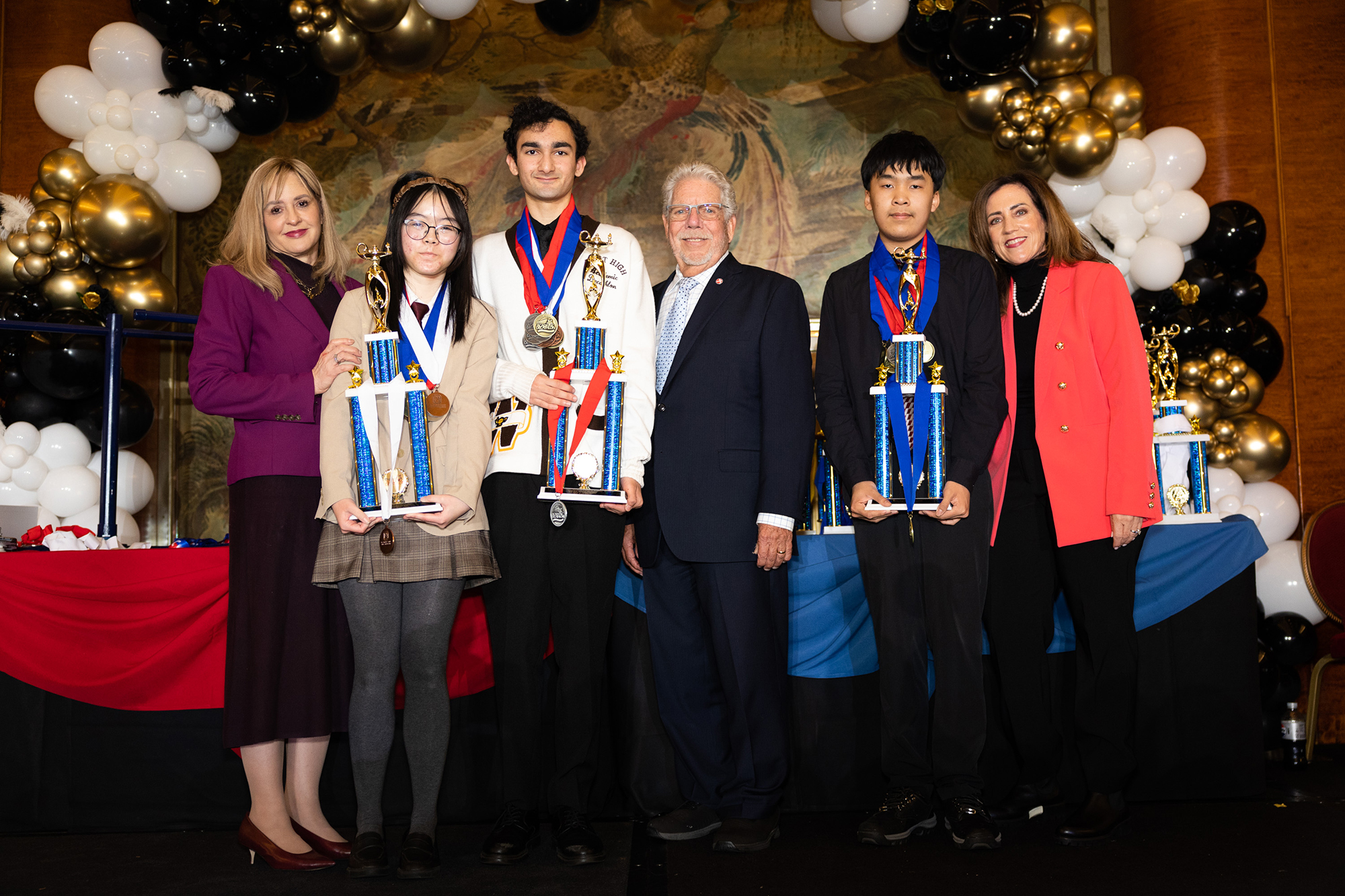
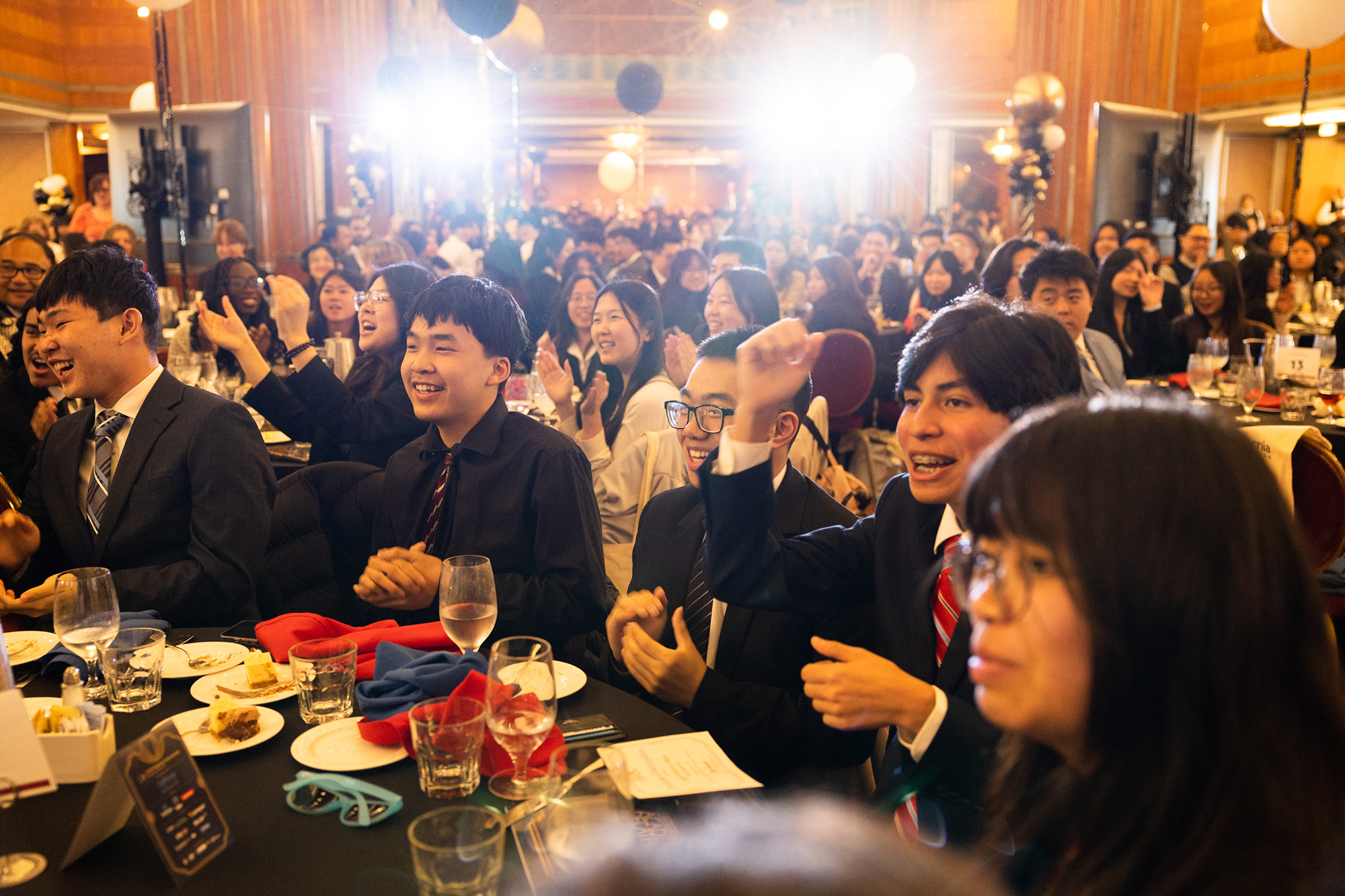
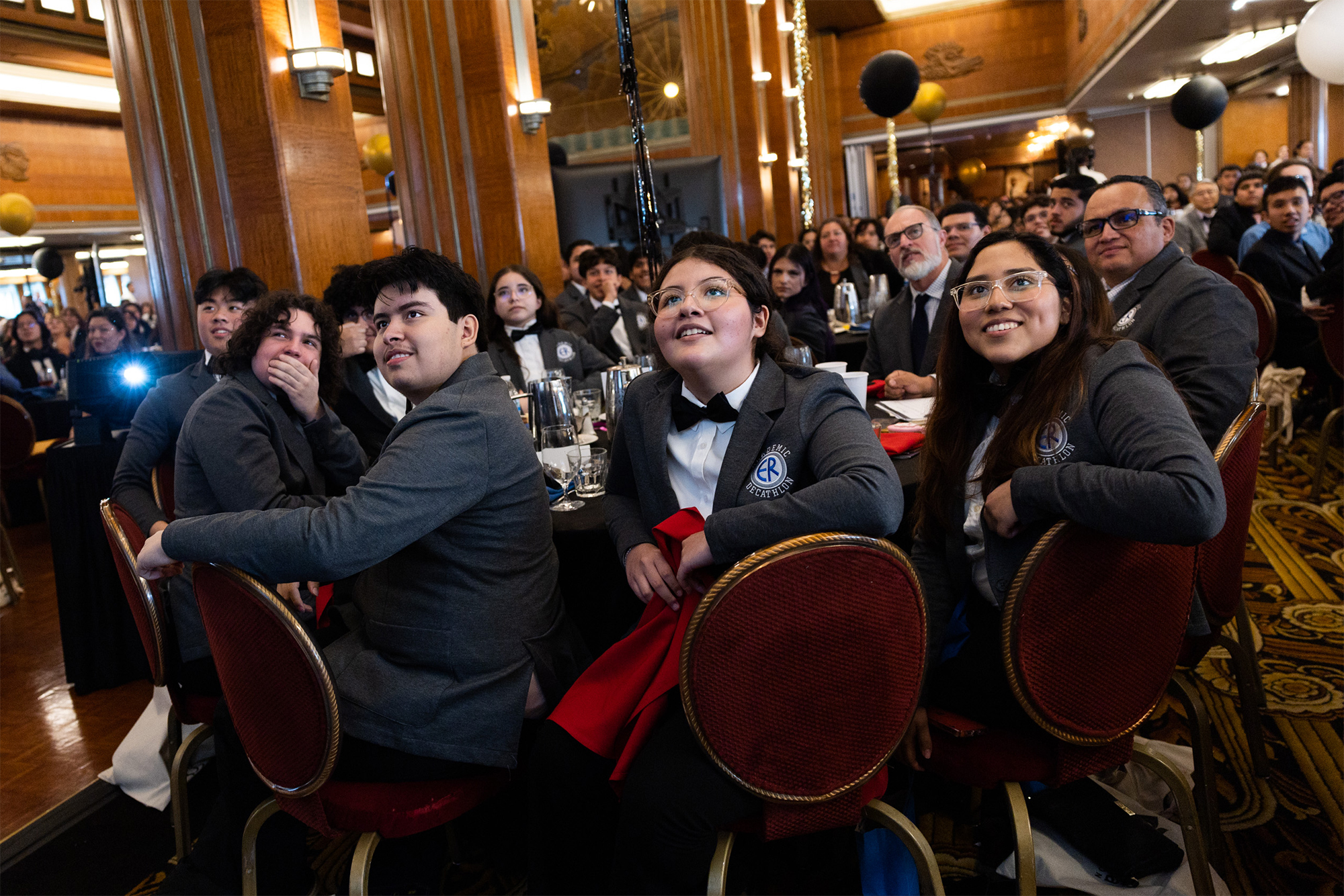
2026 Awards Banquet



2026 Sponsors

The Los Angeles County Academic Decathlon would not be possible without the support of our sponsors. We would like to thank the following sponsors for their financial support and donations.
LACOE Signature Fund @GLAEF Sponsors 2025-26
Presenting Partner
- California Credit Union
Partner
- Kindness is Free
- Woodcraft Rangers
- Lakeshore Learning
Friend
- California Volunteers: California Service Corps
- SameGoal
- Elevo
- Relay
- SchoolsFirst Federal Credit Union
- Pitsco Education
Event Sponsor
- San Gabriel High School
- Sour Strips
- Water Replenishment District
- The California Chapter of Society of Cosmetic Chemists
Resources
Connect with Us
Naime Laskar
LACAD Regional Director
laskar_naime@lacoe.edu


