



The Los Angeles County Office of Education operates the Outdoor Science School and Marine Science education programs, offering hands-on opportunities for students to study science in real-world settings. Students can participate in a Monday–Friday residential Outdoor Science School in Wrightwood or take part in a half-day, on-the-water experience aboard the Marine Science Floating Laboratory.
Since 1960, LACOE Outdoor Education has been a pioneer in environmental literacy, welcoming generations of students into nature’s classroom. Our program is a deeply respected tradition, having evolved from legacy sites like Camp Colby and the beloved Malibu campus into the world-class experiences we offer today. Through the immersive mountainside trails of the Outdoor Science School and the deep-blue discoveries of the Marine Science Floating Lab, we continue a 60-year mission of turning the great outdoors into the "best education on Earth."
Stepping out of the classroom and onto the trail or boat brings science to life. Outdoor education allows students to witness Earth systems and energy transfers firsthand, turning abstract standards into vivid, hands-on memories. Beyond the academics, these experiences build independence, foster social-emotional growth and spark a lifelong passion for environmental stewardship. It’s a space where curiosity has no ceiling and every discovery is a lesson in resilience and wonder.
We invite you to explore our programs and learn how we can support your students’ journey. Join the millions of Californians who have made LACOE Outdoor Education a cherished part of their history.
In the Mountains
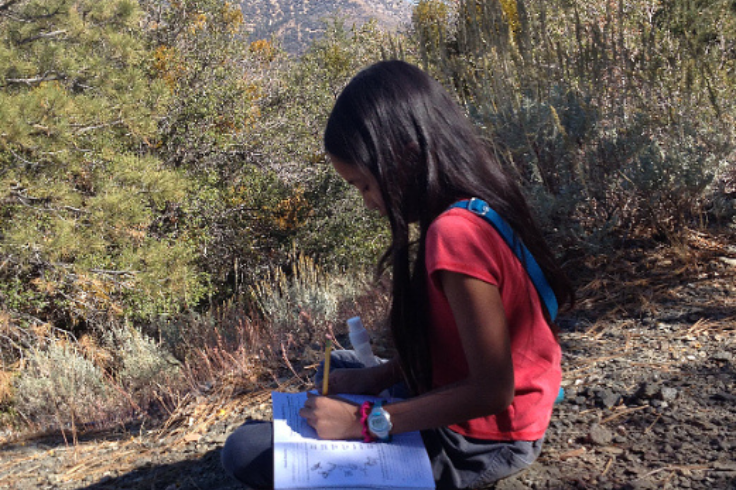
The Wrightwood Outdoor Science School is operated by the Los Angeles County Office of Education. We provide environmental science education for 5th and 6th graders in a residential camp setting. Visiting schools come for a 4-5 day program where the students explore an outdoor classroom in the mighty San Gabriel Mountains. The science content is taught by experienced naturalists and students stay in cabins overnight.
We focus on teaching state science standards through hands-on learning while exposing students to new social settings, exploring different environments, and providing them with new experiences. Students leave the program with a new sense of personal responsibility, independence and understanding of the natural world around them.
On the Water
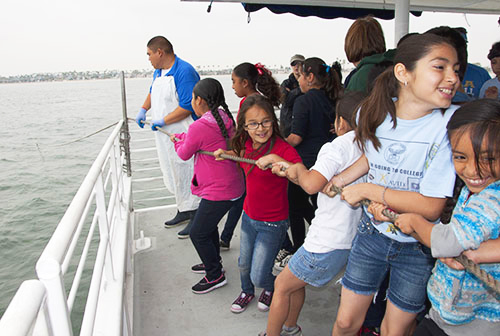
The Marine Science Floating Lab (MSFL) is an excellent opportunity for students to explore the amazing biodiversity of what is often a hidden habitat.
On a typical 3-hour cruise through the Long Beach or Los Angeles Harbor, with either a morning or an afternoon departure, students participate in hands-on, marine-science learning activities including:
collecting a bottom sediment sample to observe and record invertebrates,
an otter trawl net which collects a wide range of fish, and invertebrates from on and near the bottom,
a plankton tow and plankton observation with a microscope,
water quality studies, and
other activities that may be requested to meet the needs of the specific grade level and curriculum.
Students will also observe birds, sea lions, and other marine mammals that may be in the area. While underway to the collection areas, students observe and discuss Los Angeles Harbor, shipping vessels, breakwater function, and a variety of ecosystem and environmental engineering topics.
Students see first-hand how human behavior affects the quality of water, air, habitat, animal life, plant life, and human life in the marine environment specifically as well as in the students’ communities.
Information Regarding Wrightwood Outdoor Science School
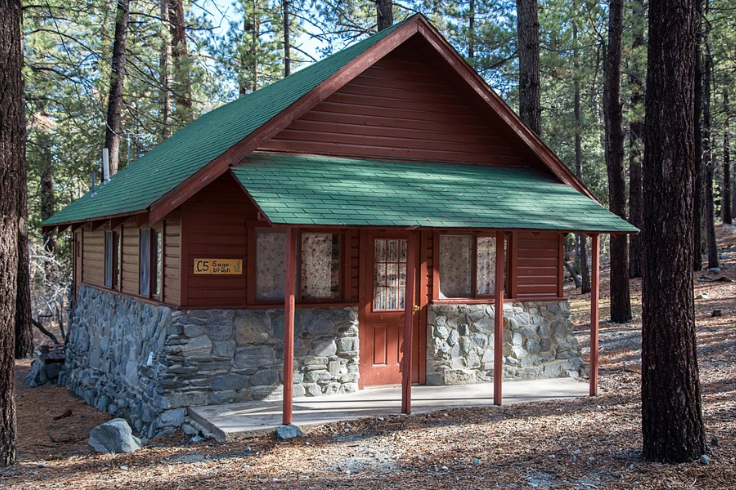
During their stay at Outdoor Science School, students will live either in the Cabins or in the Lodge. Though the cabins and lodge are vintage buildings, and each room has its own unique layout, they are very comfortable. All rooms are equipped with bunk beds, are heated, and have easy access to sinks, toilets, and showers. All bathrooms have hot water.
There is plenty of room for each student to store their belongings in an organized manner. Students work together in their cabin groups to create and uphold a community agreement, to keep the cabin clean, and can earn special visitors for good behavior.
Cabins are spacious individual units. They are located right off the main road through campus, just a five minute walk from the Dining Hall. Six cabins each accommodate up 10-12 people, including a cabin leader. Cabins are individually heated and have their own bathrooms and showers.
The Lodge is conveniently located near the Dining Hall and main meeting areas. The Lodge has 8 rooms with bunk beds. The size of the rooms in the Lodge vary, housing from 4 to 12 people each, including a cabin leader. Shared indoor bathrooms with multiple toilets and private showers are accessible via common hallways. The rooms in the Lodge are centrally heated.
What Should You Bring to Outdoor Science School?
Below is a packing list for teachers, so that you will be prepared and comfortable for the week, as well as a suggested packing list for your students and cabin leaders. If you have any questions about what to bring, don't hesitate to contact us!
Personal Packing List
In the spring and the fall, temperatures might get quite warm during the day, but can get very chilly at night. While you are not likely to see snow (though you never know!), do prepare for the possibility of rain or snow. The winter months can be quite cold and snow is likely. You will be outside much of the day, no matter what the weather, and you will be hiking on trails and sitting on the ground, so plan accordingly! Layers are the best bet for changeable weather - a sweatshirt, jacket or windbreaker that can be tied around your waist is very helpful. The sun is strong, so a hat, sunscreen and sunglasses are a good idea, too.
Outside Clothes
Good walking shoes - 2 pairs if possible. Tennis shoes, running shoes, cross-trainers, light hiking boots, etc. Comfortable, functional shoes that can be tied snugly work best. We will be hiking on rocky, sometimes steep trails and you need the support! Students wearing loose shoes have been known to trip and fall, so they need comfortable, snuggly tied shoes.
Extra socks - bring more than you think you need. Keeping your feet dry and warm is the best way to avoid blisters and discomfort (smells better, too).
Clothes you don't mind getting dirty! (But our dirt washes out - really.)
Long pants are a must. We require students wear long pants to protect legs from getting scratched and scraped on the trail, and it's more comfortable to sit on the forest floor of pine needles if you are wearing jeans or sturdy pants! 2-4 pairs of long pants are recommended.
Tee shirts. Please no tank tops or belly shirts as the risk of sunburn increases at elevation. Please keep clothes and messages on clothing appropriate for school. Bring some light colored and dark colored tee shirts - wear the light colors on hot days and the dark colors on cooler days! But plan to get them dirty, no matter what color they are.
Overshirts - long sleeved shirts or sweatshirts or sweaters or jackets or windbreakers to layer over the tee shirt - something not too bulky that can be tied around the waist is a great idea. We ask students to bring it on the trail if the weather might turn cool, so make sure it is something you don't mind carrying! Plan to get it dirty. You will probably be sitting on it much of the time!
Hat for sun (or to keep your head warm when it's cold!)
Clothes for cold or wet weather:
A warm jacket for evening activities. Not just a light sweatshirt or windbreaker, something warmer. If you don't have something warmer, bring more layers - an extra sweatshirt and a windbreaker that fits over two will help. We have warm jackets to loan out to visitors who need them, so don't worry if you don’t have one you can bring.
A rain jacket or poncho. Windbreakers are not waterproof. We have rain ponchos to loan out if you don't have your own, so don't worry if you don't have one.
Waterproof boots are nice, but if it gets really messy, we have rain/snow boots to loan out.
Hats, gloves, scarves. These are nice to bring. We do have a few extras to loan out if you don't, though. The gloves may not match, but they'll keep your hands warm!
Hats! Hats protect you from the sun when it's hot and they keep your head warm when it's cold. If you have them, bring both a sun hat and a warm cap.
Sunglasses - the sun is brighter at 6,000 ft. Please send sunglasses and/ or a hat that shades the eyes.
Chapstick - the air in the mountains is much drier than most people are used to at home. Chapstick/lip balm is needed throughout the day to keep lips from becoming chapped and uncomfortable.
Inside Clothes
Pajamas - please bring something to sleep in! sweats are fine. Silky lingerie not so much. Good ol' PJs are great!
Slippers or sandals to wear in the cabin - shower shoes are a good idea, too. Protect your feet - you'll be using them all week!
You can wear shorts in the cabin and to meals, but not on the trail. Please make sure shorts and all clothes are school appropriate.
Bedding
Sleeping bag or warm blankets/sheets
Pillow (if you forget one, just stuff some clothes into a sweatshirt and that makes a great pillow!)
Toiletries
Towel and washcloth
Soap and shampoo
Hairbrush, toothbrush, toothpaste, deodorant (please bring stick or roll-on, not spray - see what not to bring for why)
Sunscreen, chapstick, lotion (it's very dry up here)
Note on bug repellant: we don't really have bugs here, because it is so dry. If you must bring bug repellant, please ONLY bring lotion and NOT SPRAY. Aerosols are not allowed in cabins to avoid accidents.
Personal Items for Students (and Adults)
Water bottle: we will have water bottles on the trail, but having your own will make your week much easier. They are also helpful for having in the cabins at night so you don't need to get up to get a drink. If you bring disposable bottles, please plan to re-use them (our water is good right out of the tap) and recycle them when you are done! Hint: shorter water bottles fit under the sink faucet to refill more easily.
Camera - be sure to label it!!! Students bring up cameras, and many look alike. LABEL it before leaving home.
Pencils, pens, paper - You will be given a journal and homework every night - bring a pencil (or several)!
Flashlight - Be sure to label it!
A great attitude! This is going to be fun, fantastic week! A positive attitude is your best insurance that you will have a great time.
Winter clothing (December, January, February, March)
In winter, in addition to the clothes listed above, you should also bring the following, if possible:
Extra extra socks!! Lots of them! If you have wool socks, even better!!
Waterproof snow boots are great if you have them, waterproofed high top hiking boots are pretty good, but if all you have is tennis shoes or low-topped boots, we do have insulated waterproof boots to loan out. Still, if you step in a snowbank that is deeper than your boot is tall, you will have wet feet! So, again, bring extra socks!!
Warm Jacket - if you don't have a really warm jacket, layers work great, too. If needed, we also have some really warm jackets we can loan out for the week, so speak up if you are cold!
Waterproof layer -Snow is pretty dry when it falls, but when it hits your warm clothing, it melts and soaks in and can get you wet and cold. We have rain ponchos to loan out, if needed, but if you have a waterproof shell or poncho of your own, please bring that.
Warm Hat - So much body heat is lost through your head! Bring a warm hat. Warm hoods help, too. We do have some hats to loan out if you need one, but your own is always so much nicer! Don't forget to label it, or you might add to our collection of interesting hats...
Gloves or mittens - fingers get really cold, especially when they just can't resist picking up snow. Wool is great, insulated with a waterproof shell is great. Those little stretchy cotton gloves don't do much at all, and get wet easily, but they can be better than nothing sometimes. We do have warm gloves to loan out if needed, but they probably won't match! It's better to bring your own, and don't forget to label them, or you'll add to our collection!
Long warm pants - if you have rain or snow pants, great! If not, bring extra pairs. Jeans and sweats, especially, will get very wet in snow, and you will need extra pairs to wear while your wet clothes are hanging up to dry in your cabin. In very snowy weather, expect to change 2 or more times a day!
Long underwear - if you have long underwear, that's great! It's not absolutely necessary, but it will keep you more comfortable when it's really cold out.
LAYERS are always good - even in winter, it can get warm when the sun comes out, so being able to peel off those top layers will keep you more comfortable. And if the day starts out warm, it can turn cold very quickly in winter, so having that warm layer along in your backpack is a must.
This is the list of things we ask Students and Cabin Leaders NOT to bring. Although it does not apply to Teachers, it's a good idea to take a look so that you are aware of what the students and cabin leaders should NOT have in their possession at Outdoor School. Thanks!
Gum, Candy, food of any kind. We feed visitors 3 meals a day plus snacks, and you don't want any "uninvited guests" coming into the cabins and into your luggage! (and they will!) If you have special dietary needs, please see our dietary needs page. (Cabin Leaders can store their own snacks with the teachers for their time off.)
Radios or Phones - you will be listening to the "music of nature"! Wake up to the mountain “songs” of birds and squirrels!
Expensive toys - NO electronic games, Stereos, MP3 players, iPads, Gameboys, etc. We have two reasons for this:
We don't want anything to get lost or stolen that is expensive. This has not been a problem in the past, mainly because we don't allow these items to be brought up - we don't want any temptation to be there for such a thing. It could ruin your week.
We want you to try living during your short stay without electronic entertainment. It may be hard but it could change your life - and possibly lower anxiety.
Knives (even the handy Swiss Army Knife - sorry!), matches, lighter or anything else that you wouldn't be allowed to bring to school that could hurt people or property.
Make-up - We are casual here! We want you to spend cabin time working on homework, practicing your skit, cleaning up or playing games.
Sprays of any kind - hair spray, bug spray (bring lotion if you must), cologne, etc. The cabins are too small with too many people using them that might be allergic or otherwise affected by breathing the sprays.
Inappropriate clothing - no tank tops, short shorts, belly shirts, low pants that show your undies...the usual stuff not worn at most schools! No inappropriate logos or slogans on t-shirts, either.
Cell phones or two-way radios: We do not allow students to have or use cell phones during Outdoor Science School. Teachers and Cabin Leaders may bring cell phones, but we ask not use it in front of the students, for calling, texting, or browsing. Thank you!
Expensive clothes or jewelry
Meals are a very important part of Outdoor Science School. Everyone meets in the dining hall to fuel their bodies for hiking and learning and to enjoy time together. The kitchen staff prepare the meals “in house” with most items from scratch, including the sunflower seed butter and the legendary homemade trail bars.
Breakfast and Dinner are served in the Dining Hall “family style”. Lunch ingredients are packed in the morning and are eaten on trail “picnic style”. Snacks, such as apples and homemade trail bars, are served throughout the day. Second helpings on all meals are available. Student cabin groups share the set-up and clean-up responsibilities in the Dining Hall on a rotating basis.
Dietary Restrictions
Our kitchen staff works hard to serve excellent food to all students. If a child, Cabin Leader or Teacher has dietary restrictions, we are happy to accommodate in ways that we are able. Vegetarian, gluten-free, and dairy-free options are available. We have peanut-free and tree nut-free options as well. Visitors with dietary restrictions are encouraged to communicate about food needs with the participating teacher and Outdoor Science School in advance to help us to better serve your needs. If you have any questions about the food at Wrightwood, please contact the participating teacher at your school.
Note: This is a sample menu for a typical 5-day week.
If you are a parent whose child is attending Outdoor Science School, we have some information that may be helpful to you. There are a few ways to access the information. You can go to our page of frequently asked questions. Or, you can pick a topic from the list below. If you have questions that are not answer here on the web site, please ask your child's teacher, or contact the Outdoor Science School site your child is attending. Phone numbers and email addresses are available on our contact numbers at the bottom of the page.
Visiting the Outdoor Science School
Parents or Guardians interested in touring the Wrightwood Outdoor Science School site may set up a guided tour through their child's school. The school will then set up a date sometime prior to the trip to outdoor science school on a Tuesday, Wednesday, or Thursday with all interested parents. Please contact your child's school.
You may not visit the outdoor school during the week your child is in attendance.
Sending Mail to Your Child
Students love getting mail when they are away from home at Outdoor Science School. We encourage you to send letters and postcards to them.
How To Send Mail
Through School Teachers:
On Monday when you drop your child off at school, you can hand your cards or letters to one of the teachers attending Outdoor Science School with your child. You don't need a full address, but be sure to put your child's name on the envelope.
U.S. Post Office:
You may also send mail through the postal service. Since the Outdoor Science School is in the mountains, it sometimes takes several days for mail to arrive. It is best to mail letters the weekend before your child leaves for OSS. Letters mailed on Monday may not arrive until after your child is already back home! Address your letters to:
Child's Name, Child's School
LACOSS - Wrightwood
P.O. Box 1561
Wrightwood, CA 92397-1561
What Happens to Late Mail?
Any letters which arrive after the students return home on Friday are marked "Return to Sender" and sent back to the post office. For this reason, be sure to include a return address on the envelope. Since the post office does not return post cards, unfortunately we have no choice but to recycle them.
What Not to Send
Please do not send any prohibited items (food, candy, gum, money, valuables, etc). Occasionally, parents send up a "Care Package" with cookies, candy, and other items the kids are not supposed to have. When we get those packages, the students open them in our presence. Any prohibited items are taken from the student and returned on Friday as they leave for the return trip to school. Since it's inconvenient for us and doesn't really benefit your child, please do not send "Care Packages" or any prohibited items.
Here are some of the most common questions that parents ask about the Wrightwood Outdoor Science School.
What should my child bring? Do you have a packing checklist?
Great question! We, like you, want to make sure that your child has everything they need for a successful week at Outdoor Science School. Review Packing List tab. In the event that your child does not have a winter jacket, snow boots, or a sleeping bag, we have these items available to borrow.
How do I send mail to my child?
We recommend mailing letters the week before your student's trip to outdoor school. Mail service to the mountains can take some days, so this ensures that the letter will arrive while your child is still here. The Information for Parents tab includes information on how to address your envelope, what happens to late mail and what not to send.
For Wrightwood:
Your child’s name/ School
PO Box 1561
Wrightwood, CA 92397-1561
What are the bus departure and arrival times to and from school?
Please contact your school's teacher to inquire about bus departure and arrival times.
What is the cost?
Please contact the school's teacher to inquire about the cost of Outdoor School and what scholarships or fundraising opportunities may be available.
Who are the outdoor science teachers?
Would you like to know who will be teaching your child during Outdoor School week? Click to view our Wrightwood Staff Page.
How close are you to emergency services?
One of the fantastic things about Wrightwood Outdoor Science School is that it is just down the street from the Wrightwood Fire Department. Emergency services are less than 5 minutes away.
Will my child be safe?
Yes. Safety is our #1 priority at Outdoor Science School. All Wrightwood Outdoor Science School staff have extensive experience leading trail groups as well as Wilderness First Aid and CPR certification, and emergency services are mere blocks away.
Can I visit the site?
To arrange a visit to Wrightwood, parents or guardians may set up a guided tour through their child's school. The school will then set up a date sometime prior to the trip to outdoor science school on a Tuesday through Thursday with all interested parents. You may not visit the school during the week when your child is in attendance.
If you would like to be a part of Outdoor Science School week, talk to your school about being a Cabin Leader! If you are interested in being a cabin leader, contact your school to see what their need are. Our experience indicates that having parents stop by for a short visit often creates problems with homesickness. Sometimes it is your own child that becomes homesick when you leave, but more often it is other students who see parents visiting and then wonder "Why didn't my mom or dad visit me?" This often sends them on a downward spiral of homesickness and insecurity. Please help us make it a successful week for everyone by not visiting your child at Outdoor Science School. Don't worry they will have so much to share with you on Friday!
How do I best prepare my child to successfully be away from home?
The American Camping Association website has a great page of advice on preventing homesickness and working on coping strategies at home, as well as ways we will help at outdoor school. Please click here to read this excellent advice! Below is some advice in brief:
- Parents: Even the most well-adjusted child can get homesick, so don't assume your child is immune. Talk about homesickness and strategies for coping with it before outdoor school, but do NOT tell your child you will pick them up if they are homesick. This is a recipe for failure. Do work with your child to create positive expectations. If you are feeling anxious, try not to let this show to your child, as this will increase the chances they will be homesick. THEY worry about YOU, you know! Other things you can do at home include:
- working together as a family to plan, and pack;
- spending practice time away from home, such as a long weekend at a friend's house;
- experimenting with the best coping strategies during this practice separation; and
- preparing pre-stamped, pre-addressed envelopes to bring along.
- Read this article for more prevention and coping strategies for homesickness
- Students: Focus on the positive - you are going to have a great time and learn a lot, but not if all you think about is how homesick you are. You are only at outdoor school for 5 short days and 4 nights, make the most of it! We will help by keeping you busy and making it fun, but you have to help, too. We will ~not~ let you call home if you feel homesick - can you guess why? That's right - it only makes it worse, and we want to make it better and make this one of the best weeks of school ever! We don't want you to miss out!
- Cabin Leaders:You can help a great deal by keeping the students busy and organized in the cabin. Have study hall times so they can finish their homework, skit practice times so you'll have a great skit - encourage working together and everyone's involvement! Assign buddies and rotate them if needed to break up cliques, including moving bunks if it helps. Play games with the group, make up songs, stories, read stories to them. Assign duties to each student for clean-up procedures. And most importantly, focus on the positive! Spend time each day having each student share what was fun, what they learned, what they are excited about for tomorrow. Keep them focused on those positive experiences and that is what they will remember most!
- Teachers:Prepare the students in the classroom for homesickness. Go over policies - we won't let you call home or let your parents pick you up just because you are homesick. Go over coping procedures: stay busy, focus on positive, bring pre-addressed, stamped envelopes and write home every day. Build up positive expectations for students. If you have students you are concerned will be homesick, work with their parents on coping strategies and what to say and not to say at home (no Pick-Up Deals!) Surprisingly, having a friend in the cabin with them isn't necessarily protection against homesickness. Even having a parent come up as a cabin leader doesn't always help. Positive expectations, attitudes, focus, and keeping busy and involved are the best remedies. Read this article for more prevention and coping strategies for homesickness.
Can I talk to my child by phone during the week? Or can my child phone me?
Your child is in great hands. Los Angeles County Outdoor Science School has more than 50 years of experience running successful and inspiring week-long residential programs. As part of our program, we encourage students to remain engaged and in-the-moment in order to get the most out of their school week at Outdoor Science School. Part of this engagement means that we do not allow cell phones or any electronics (other than cameras that can’t connect to the internet) during the week. Similar to a site visit, a phone conversation can often send a student into a spiral of homesickness, which will lead to them missing out on many wonderful activities and experiences as they struggle with this homesickness. To read an article about homesickness, click here. It is also unfair for one child to call home if not every child can call home, and here at Outdoor School we have every day packed to the brim with engaging activities. Please help us make the week successful for everyone by respecting our no-phone call rule at Outdoor School. We work with your child’s classroom teacher and will call if there is a problem regarding your child.
Can my child bring a cell phone?
We ask that students do not bring cell phones (or other devices that connect directly to the internet) to Outdoor Science School. If they do, they may be collected on Monday by classroom teachers and returned Friday.
Information for Teacher
What Does the Los Angeles County Outdoor Science School Offer?
LACOSS is a unique experience. We are here to offer your students a week-long science program based on NGSS and phenomena while also designed to fit your needs. Any specific topics, skills, or development activities that you would like covered, please mention to our Lead Teacher and Naturalist Instructors so that we can design our program just for your school’s needs!
Teacher Facilities at Outdoor Science School
Click here to see visiting teachers special accommodations for the Wrightwood site, called the Huddle Hut.
Outdoor Science School Rules
Click for the details about our rules system and consequences.
Common Situations at Outdoor Science School
This sections contains brief descriptions of the most common issues we encounter at Outdoor Science School, and a few tried-and-true pointers on how to effectively deal with them. Remember - our staff has heaps of experience with these issues and is always here to help out. If ever you need anything, just ask!
The Daily Schedule
Click the link to see a typical schedule at Outdoor Science School.
Sample Menu
While you are at Wrightwood, our dining service will provide you with Breakfast, Lunch, Dinner, and two or three Snacks per day. No need to bring your own food! Click the link for the sample menus to see what we may offer for each meal.
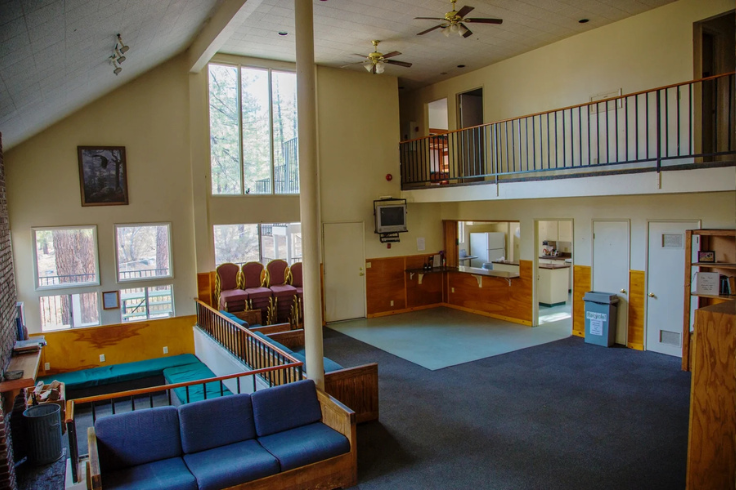
At the L.A. County Outdoor Science School at Wrightwood, the teacher accommodations are located in the Huddle Hut. The Huddle Hut is a large, two-story, cozy white and green house with numerous bedrooms, a large open living room with a fireplace, full kitchen, and multiple bathrooms.
The infirmary is located in a room attached the Huddle Hut, making it easy for teachers to attend to or check on students without having to travel to another building.
The Huddle Hut is on the forested campus within easy walking distance to the Dining Hall, student cabins, and Smith Hall meeting room.
Common Situations at Outdoor Science School
Below are brief descriptions of the most common issues we encounter at Outdoor Science School, and a few tips on how to effectively deal with them. Our staff has significant experience with these issues and is always happy to help.
Homesickness
Information from the American Camping Association (ACA) Excerpts from the article below was written for summer camp, but most of its excellent advice holds true for the short week at outdoor science school as well.
Here is another link to an article about the benefits of an experience away from home. http://baltimoreschild.com/2017/01/01/could-it-be-magic-the-transformative-pixie-dust-of-sleepaway-camp/
How to Prevent Homesickness • Helping with Homesickness
What is it?
Homesickness is, above all, a normal feeling. It is the natural result of separating from home and loved ones. In a recent study, nearly 96 percent of all boys and girls who were spending two weeks or more at overnight camp reported some homesickness on at least one day. Almost all children (and grown-ups!) feel homesick when they're away from home. People's feelings simply vary in intensity.
What causes it?
There are several factors that put children at greater risk for becoming homesick. For example, children with little previous experience away from home, children who have low expectations of camp, children who feel forced to go to camp, children who are unsure whether adults will help them if they need help, children who have little practice coping with negative emotions, and children whose parents express a lot of anxiety are most likely to feel homesick.
You may be surprised to learn that some factors have nothing to do with the intensity of homesickness. These include geographic distance between home and camp and the presence of a friend from home at camp.
When is it a problem?
Most feelings of homesickness are not problematic. In fact, missing home isn't a problem until it becomes a preoccupation. When the feelings of sadness and anxiety associated with missing home become so strong that making friends, having fun, sleeping, eating, and participating in activities is difficult, something must be done.
What can be done?
It used to be thought that feelings of missing home disappeared spontaneously after a few days at camp. Although this is true for some cases of mild homesickness, research has demonstrated that if left unchecked, homesickness can intensify over time. The best remedy is a two-pronged approach:
Prevent homesickness at home, before it starts; and
Actively cope at camp, if natural feelings of homesickness reach problematic levels.
The best at-home prevention strategies include:
working together as a family to plan and pack
spending practice time away from home, such as a long weekend at a friend's house
experimenting with the best coping strategies during this practice separation
preparing pre-stamped, pre-addressed envelopes to bring to camp
The best in-camp interventions for homesick campers include:
staying busy
talking with someone
remembering that you're not at camp for your whole life-just a few days
writing letters home
remembering all the fun activities that camp offers…and doing them!
Watch out!
The most common mistake parents make is the Pick-Up Deal. It's normal for children to ask, "What if I feel homesick?" Tell your child that some feelings of homesickness are normal and help him practice coping before camp starts. But never ever say, "If you feel homesick, I'll come and get you." This conveys a message of doubt and pity that undermines children's confidence and independence. Pick-Up Deals become mental crutches and self-fulfilling prophecies for children as soon as they arrive at camp. If, after spending practice time away from home, a child is still very anxious about overnight camp, consider waiting a until next summer.
The Good News
When children arrive at camp with a repertoire of coping strategies and some practice time away from home under their belts, they are ready for those normal feelings of homesickness. Sure, they'll miss home, but they'll know exactly what to think and do when it bothers them. Best of all, the staff at a high quality camp will be there to help. Nothing boosts children's self-esteem quite like overcoming a bout of homesickness and learning how good they are at controlling the amount of fun they have. Camp truly is a classroom for life lessons.
How To Cope
Helping Your Child Cope at Camp
Following are some tips from the American Camping Association to consider before your child leaves for camp:
If possible, visit the camp ahead of time so that your child will be familiar with the cabins and other general surroundings
Consider arranging for a first-time camper to attend with a close friend, relative, or camp "buddy"
Do not tell your child in advance that you will "rescue" him/her from camp if he/she doesn't like it
Discuss what camp will be like well before your child leaves, acknowledging feelings; consider role-playing anticipated camp situations such as using a flashlight to find the bathroom
Send a letter to your child before camp begins so he/she will have a letter waiting for his/her arrival
Allow your child to pack a favorite stuffed animal and/or picture so that your child will have a reminder of home
If adjustment problems (such as homesickness) do occur while your child is at camp:
Talk candidly with the camp staff (or student’s teacher) to obtain his/her perception of your child's adjustment
Resist the temptation to "rescue" your son or daughter from this experience
Acknowledge your child's feelings and communicate your love. You might say, "If you still feel this way in two days, we'll discuss what we can do."
Support your child's efforts to work out the problems with the help of the camp staff
Remind him/her, if necessary, that he/she has made a commitment
Trust your instincts: The occasional child who is truly not enjoying anything, having a miserable time and not adjusting to camp life at all should be allowed to return home after a reasonable amount of time and effort.
Prescription for Camper Homesickness
Keeping in Touch
Many camp directors encourage their campers to write home regularly to their parents, brothers, and sisters.
Do's
Give your child pre-addressed, stamped envelopes or postcards so that they can keep you informed of camp activities
Send a note or postcard in advance to the camp so there will be a personalized touch of home when your child arrives. This lets young campers know that the family has not forgotten them. In your correspondence, assure the camper that you know he or she is having a good time and express enthusiasm for the camp's activities
Don'ts
Although there are benefits in keeping youngsters informed of what's going on at home, don't go into great detail since the young adventurers might feel they're missing something back home. Directors advise parents not to mention how much they miss their children or "that the dog and cat miss them."
Don't worry. Your natural reaction is to call on the first day just about bedtime to see how your camper is doing. Remember, counselors are trained to recognize and deal with symptoms of homesickness
As one experienced camp director noted, "We have few homesick children, but we have homesick parents by the dozens."
Elevation Sickness
Water, Water, Water!
Hydrate, Hydrate, Hydrate!
The most common illness we see at Wrightwood is mild elevation sickness. We are located at 6,000 feet in the mountains which means we have different and interesting ecosystems up here, but it also means that your body will have to get used to the "thin air." This can occasionally cause symptoms such as mild headaches and stomachaches. If these mild symptoms happen, they are most common upon arrival on Monday and tend to improve quickly as your body adapts.
The very best thing you can do for your body is stay hydrated. Make sure that you are drinking lots of water - whether you are a teacher, cabin leader, or student, so that you are feeling your best!
If someone complains of a stomachache or headache, the first question we ask is, "How much water have you had today?"
Behavioral Issues
Firm! Fair! Friendly!
Occasionally, a student may have trouble adjusting to Outdoor Science School and following the rules. The very best thing for helping students manage their behavior is to be firm, fair, and friendly. We set specific expectations, with specific consequences, and follow up with those consequences. Our rules are:
Be safe • Be Respectful • Be Responsible
Upon arrival, students and Cabin Leaders will be given an orientation including an introduction to the rule with specific examples of what is safe, respectful and responsible, as well as what is not. Cabin leaders in their orientation will get some tips on how to help students manage their behavior.
The experienced Outdoor Science School staff is here to help any teacher, cabin leader or student if any issues come up. We are all more than happy to help. That is what we are here for!
Funding and Special Programs
Coming Soon!
Coming Soon!
Coming Soon!
Coming Soon!
Coming Soon!
How to Choose a Camp: Homesickness
The American Camping Association website has a great page of advice on preventing homesickness and working on coping strategies at home, as well as ways we will help at outdoor school
Think Earth Foundation
CONTACT US
L.A. County Outdoor Science School Program
outdooreducation@lacoe.edu
562-922-6330
Marine Science Floating Laboratory
outdooreducation@lacoe.edu
562-922-6330


