


The Los Angeles County Board of Education and the Los Angeles County Office of Education Superintendent have recognized September 2026 as National Suicide Prevention Month, a time to raise awareness, promote hope and help-seeking, reduce stigma, and strengthen our collective commitment to suicide prevention. This month serves as an important reminder to break the stigma surrounding mental illness, encourage open conversations, and offer support to those who may be struggling. By commemorating this month, we aim to foster a culture of understanding and compassion, ensuring that everyone has access to the help they need.
Suicide prevention is a shared responsibility, and LACOE recognizes the important role schools play in creating safe, supportive, and connected environments where students feel seen, valued, and empowered to seek help.
According to the 2025-26 California Healthy Kids Survey, between 8 and 12 percent of secondary students across grades 7-12 reported seriously considering attempting suicide during the past year, underscoring the need for comprehensive school-based suicide prevention and mental health supports. Through prevention, early identification, and ongoing mental health promotion, schools can strengthen protective factors and ensure students and families are connected to appropriate support and resources when needed.
Schools can honor Suicide Prevention Month by hosting activities that promote mental well-being and create safe spaces for students to talk about their feelings. By engaging in these activities, schools can help foster an environment where students feel empowered to reach out for help and support one another. Some ideas include:
- Review and update your LEA's suicide prevention policy and protocols.
- Review suicide risk assessment, student safety planning, post-hospitalization re-entry support, and Psychological First Aid with district and school crisis response teams.
- Provide staff training on warning signs, referral pathways, and appropriate response procedures.
- Share developmentally appropriate suicide prevention and mental health resources with students, staff, and families throughout the year, not only during September.
- Promote school connectedness and belonging by ensuring students have trusted adults and supportive relationships on campus.
- Create opportunities for students to learn about mental health, coping strategies, help-seeking, and available supports in developmentally appropriate ways. Incorporate activities that strengthen resilience, coping skills, emotional regulation and help-seeking behaviors.
- Use student voice and leadership opportunities to promote a culture in which seeking help is normalized and encouraged.
- Identify and promote safe spaces on campus where students can connect with counselors, social workers, psychologists, or other trusted adults.
- Use student voice and leadership opportunities to promote a culture in which seeking help is normalized and encouraged.
- Create art or writing projects where students can express their thoughts on mental health and the importance of supporting each other.
- Encourage the school community to wear a specific color (like green) to show solidarity.
LACOE is committed to strengthening suicide prevention and mental health advocacy by providing training, resources and support and by prioritizing the mental health and well-being of students, families and staff.
Upcoming Professional Learning Opportunities
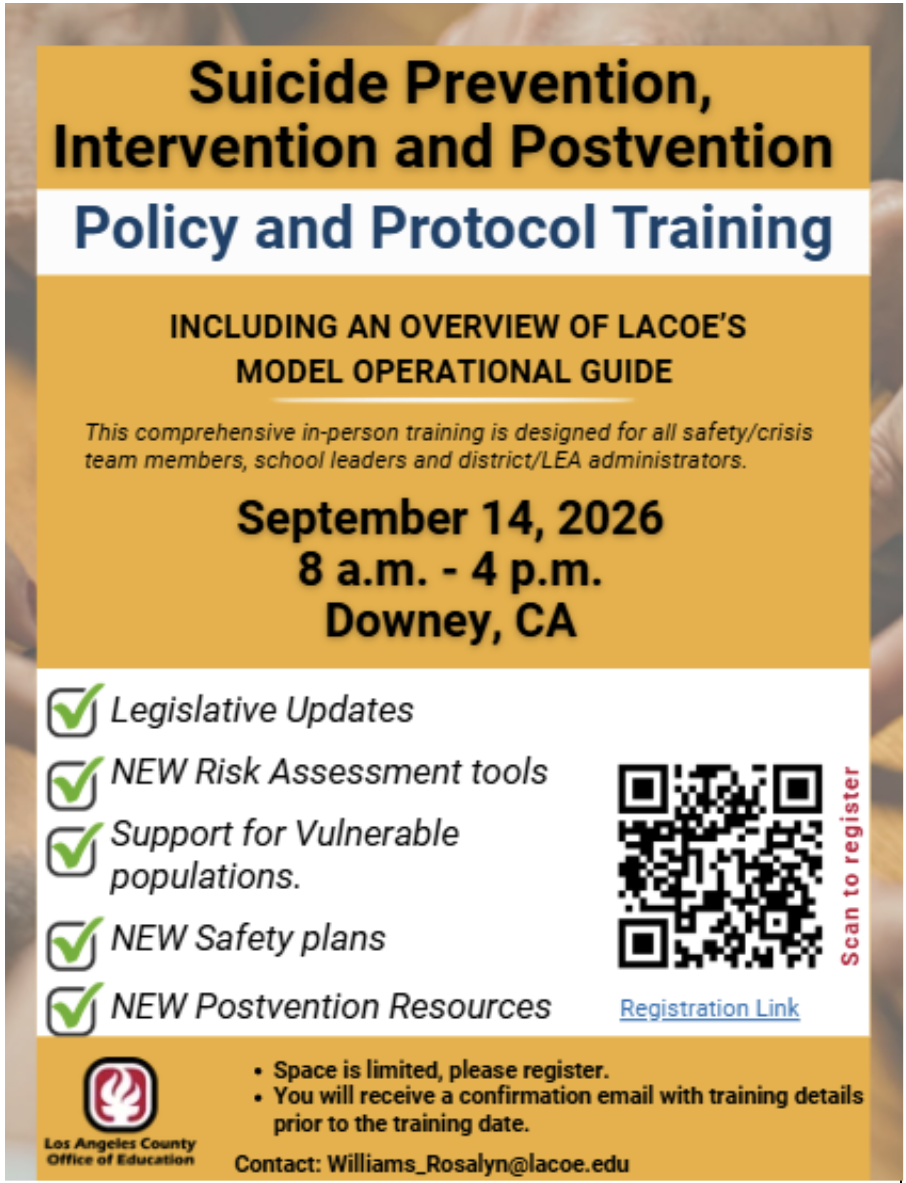
- September 14, 2026: Comprehensive Suicide Prevention, Intervention, and Postvention Training
This training will be an overview of the LACOE model operational guide and how to implement the strategies discussed in the guide including the laws and data that guided the development of this guide, preventative strategies for supporting all students, intervention and postvention techniques for supporting students with self-harming and/or suicidal ideation. - September 23, 2026: FOCUS Resilience Curriculum
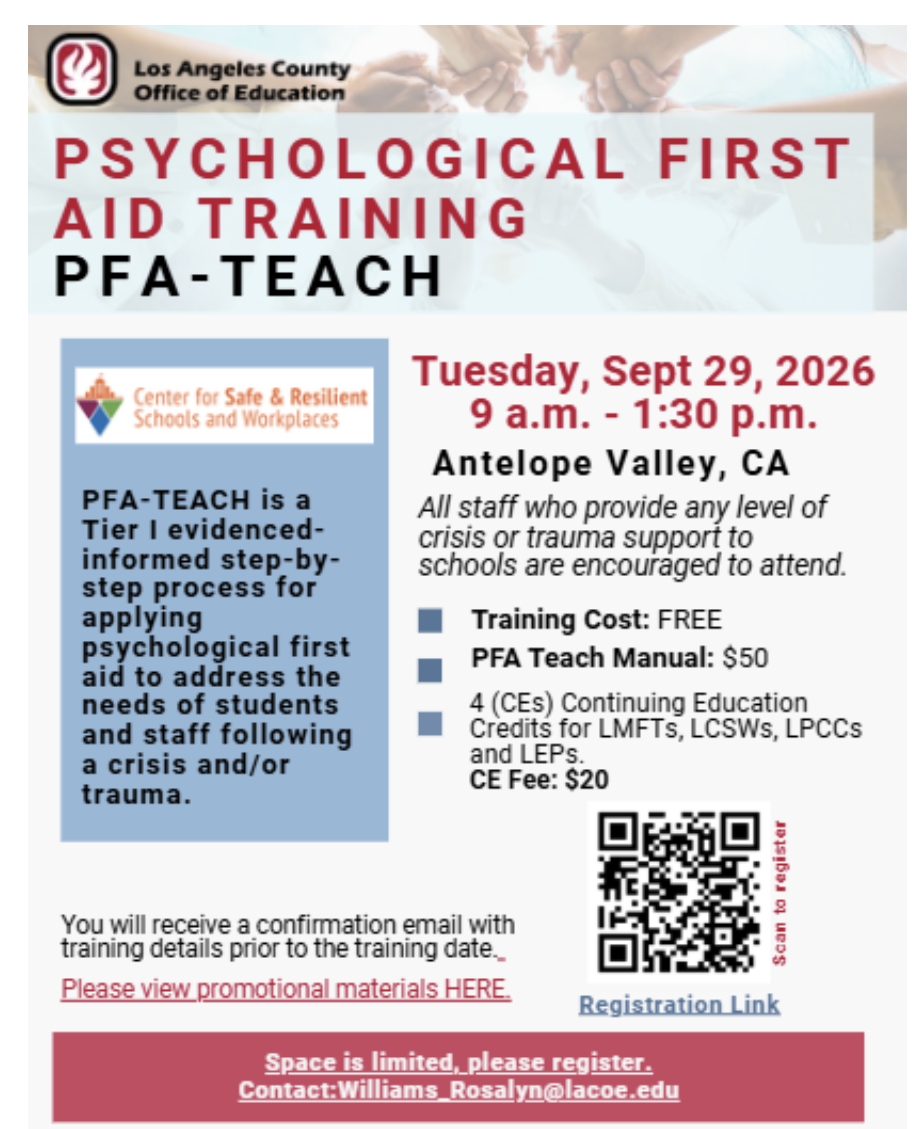
The FOCUS Resilience Curriculum provides training for children and teens in five core resilience skills through a nine-module curriculum that can be adapted for classrooms or small groups. This training includes curriculum appropriate for students in grades 3-12. - September 29, 2026: Psychological First Aid TEACH
PFA-TEACH is a Tier I evidenced-informed, easy to learn and apply step-by-step process for applying psychological first aid to address the needs of students and staff following a crisis and/or trauma. This training is designed for district and school crisis response team members, school support staff, and educators.
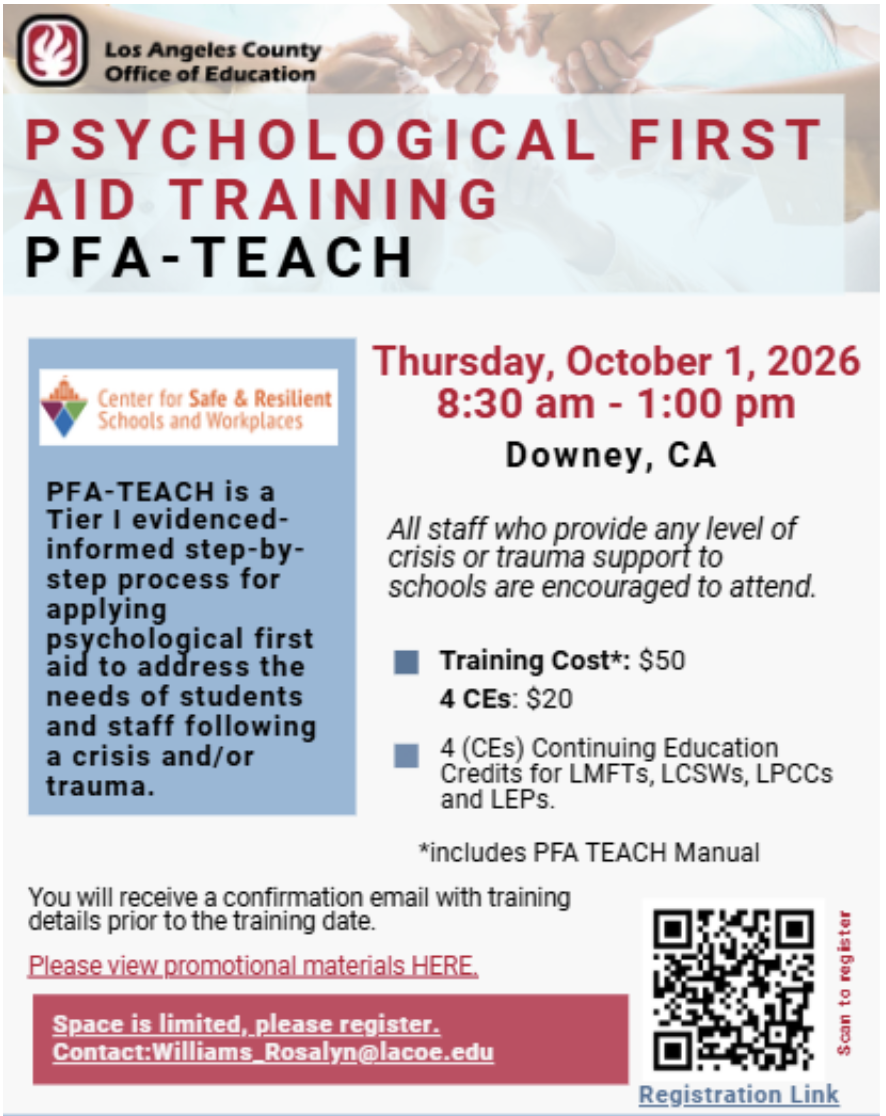
- October 1, 2026: Psychological First Aid TEACH
PFA-TEACH is a Tier I evidenced-informed, easy to learn and apply step-by-step process for applying psychological first aid to address the needs of students and staff following a crisis and/or trauma. This training is designed for district and school crisis response team members, school support staff, and educators. - October 14 and 21, 2026: Expand Your Clinical Toolbox with MATCH: Counseling Children and Adolescents with Depression, Anxiety, Trauma and/or Disruptive Behaviors.
This 2-day training provides an overview of the Modular Approach to Therapy for Children (MATCH) equipping participants with evidence-based, flexible strategies to support children and adolescents experiencing anxiety, depression, disruptive behavior and/or trauma related symptoms. Participants will learn core components of MATCH treatment with an emphasis on practical application in school-based settings. The training also highlights culturally responsive practices, family engagement, and integration within a Multi-Tiered System of Supports (MTSS), ensuring participants leave with actionable tools to improve student outcomes and emotional well-being. - October 20, 2026: FALL Mental Health and School Counseling Network Meeting
We are pleased to welcome guest speaker Lesly Solano, who will provide an overview of the Capacity Grant and Fee Schedule Program. During this training, participants will review best practices for delivering student services, documentation requirements, and billing procedures across the MTSS tiers of support. Attendees will also have the opportunity to ask questions, engage in discussion, and gather current information related to mental health and school counseling practices.
View the 2026-27 LACOE Mental Health and School Counseling Professional Learning Calendar for more training opportunities.
Resources to Promote Mental Health and Prevent Suicide
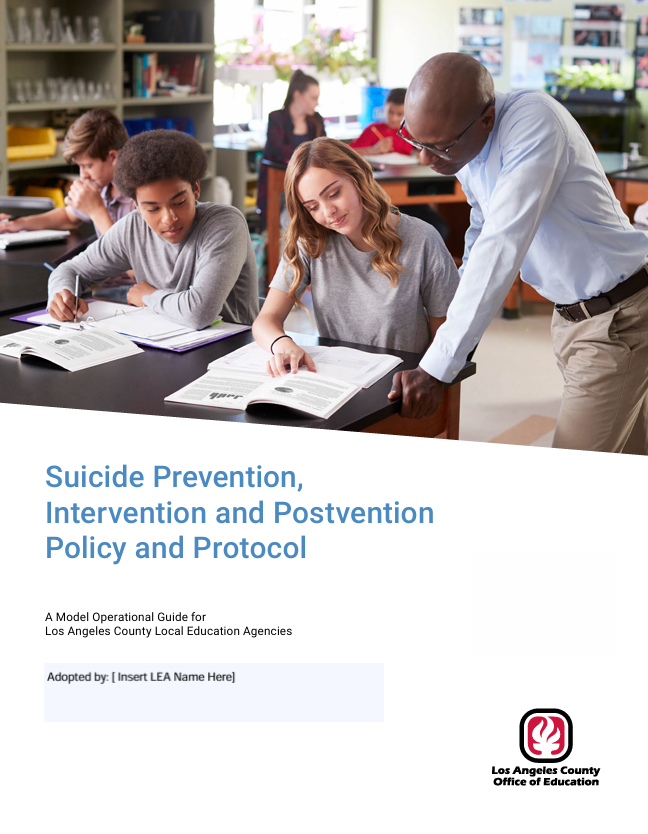
- Suicide Prevention, Intervention and Postvention Policy and Protocol - a revised Model Operational Guide will be published soon.
- Erika’s Lighthouse K–12 Mental Health Programs: Free, evidence-informed K–12 programming addressing mental health, depression, suicide prevention, and inclusive school communities. They also offer staff training and certificates of completion.
- Creative Aware Project: The Los Angeles County Office of Education's Center for Distance and Online Learning (CDOL) unit developed the Creative AWARE Project to support a sustainable infrastructure for school-based mental health programs. By leveraging collective impact partnerships, the project aims to support LA County schools with promotion, awareness, prevention, intervention, and resilience activities to ensure that school-aged youth have access to arts integration and mental health services to meet their needs.
- SAMHSA Suicide Prevention Awareness Month Toolkit
- The 988 Suicide & Crisis Lifeline provides free and confidential emotional support to people in suicidal crisis or emotional distress 24 hours a day, 7 days a week, across the United States and its territories. The 988 Lifeline is comprised of a national network of over 200 local crisis centers, combining local care and resources with national standards and best practices.
- Never A Bother CA Public Health child and youth suicide prevention resources
- NAMI Support and Resources for Kids, Teen and Young Adults
- Hope and Justice Art Contest
Resources to Support the Development and Sustainability of Comprehensive School Mental Health Systems
The Los Angeles County Billing Consortium
The LACOE Billing Consortium serves as a centralized support model designed to help LEAs successfully participate in the CYBHI Fee Schedule program. Our purpose is to reduce administrative burden, increase reimbursement opportunities and ensure compliance with state requirements. For more information, please contact Lesly Solano, Program Manager, at solano_lesly@lacoe.edu.
LACOE Mental Health and School Counseling webpage
LACOE Mental Health and School Counseling partners with Local Education Agencies to build multi-tiered, culturally responsive and trauma-informed systems of support that promote emotional wellbeing and academic success. Please check out the numerous resources curated to assist in the development of comprehensive school mental health systems.
Free Administration of the California Healthy Kids Survey through June 2028
LACOE is funding the administration of the core California Healthy Kids Survey with the Behavioral Health module when both are administered together. Together these surveys support LEAs in evaluating school and LEA school climate and student wellbeing. For additional information, please contact us at MSHC_Unit@lacoe.edu.
Parents and caregivers are important partners in supporting a young person's mental health and emotional well-being. Families can:
- Create regular opportunities to check in and listen without immediately trying to solve the problem.
- Ask directly about emotional well-being when concerned and take statements about suicide or wanting to die seriously.
- Become familiar with potential warning signs and significant changes in mood or behavior.
- Encourage children and adolescents to identify trusted adults they can turn to at home, at school, and in the community.
- Talk openly about mental health and reinforce that asking for help is a sign of strength.
- Maintain communication with the school counselor, social worker, psychologist, or other appropriate school personnel when concerns arise.
- Help young people develop healthy coping strategies and routines that support sleep, connection, physical activity, and emotional well-being.
- Be aware of the resources and crisis supports available through the school and community.
- Seek professional support when changes in a child's behavior, mood, functioning, or statements raise concerns about their safety.
- BrightLife Kids Everything BrightLife Kids offers* is fully paid for by the state of California. Together, we are working to ensure all California families can find the behavioral health support they need, when they need it. If you have a California zip code and a child ages 0–12, you’re qualified. We’re here for everyone — and free for everyone.
- Erika’s Lighthouse Family Resources: Resources organized around prevention, recognizing concerns, getting help, and supporting a child's mental wellness. It also includes family workbooks, workshops, conversation guides, stress-management resources, and information about depression and suicide.
- What Can I Do if My Child or Teen Has a Mental Health Crisis?: This resource, from the National Alliance of Mental Illness (NAMI), provides families with information about recognizing a youth mental health crisis, getting help, and planning ahead.
- Supporting Your Child’s Mental Health: A Parent and Caregiver’s Guide to Suicide Awareness and Prevention
- Spanish Resources
Your mental health matters. You do not have to handle difficult feelings by yourself. If you are struggling:
- Talk to someone you trust. This might be a parent, caregiver, teacher, counselor, social worker, coach, administrator, or another trusted adult.
- Tell someone when you are feeling overwhelmed, hopeless, unsafe, or having thoughts about suicide.
- Check in on your friends. If a friend tells you they are thinking about suicide, tell a trusted adult, even if your friend asks you to keep it a secret.
- Learn healthy ways to manage stress and strong emotions, such as movement, journaling, breathing exercises, music, creative activities, or spending time with supportive people.
- Stay connected to people and activities that give you a sense of belonging and purpose.
- Remember that asking for help is okay. You deserve support.
- Learn what mental health resources are available at your school and how to access them.
- Participate in school activities that promote kindness, inclusion, connection, and mental health awareness.
Resources
- You Are Never A Bother - resources for children and youth
- Soluna: a free, anonymous mental health and wellness app designed specifically for teens and young adults (ages 13 to 25) in California. Funded by the California Department of Health Care Services as part of the CalHOPE program, it provides safe, no-cost support with no insurance or waitlists required.
- NAMI Support and Resources for Kids, Teen and Young Adults
- Hope and Justice Art Contest
- The 988 Suicide & Crisis Lifeline. If you need to talk (or text or chat) the 988 Lifeline is here. At the 988 Suicide & Crisis Lifeline, we understand that life's challenges can sometimes be difficult. Whether you're facing mental health struggles, emotional distress, alcohol or drug use concerns, or just need someone to talk to, our caring counselors are here for you. You are not alone. The 988 Lifeline is available 24/7/365. Your conversations are free and confidential. To access support you may call, or text 988 or access the chat via https://chat.988lifeline.org/.
- The Trevor Project: The Trevor Project is the leading suicide prevention and crisis intervention nonprofit organization for LGBTQ+ young people. We provide information & support to LGBTQ+ young people 24/7, all year round.
- Teen Line: The Teen Line’s highly trained teen listeners provide support, resources and hope to any teen who is struggling. The Teen Line can be reached by:
- Phone (6 -10 P.M.): 800-852-8336
- Text (6 -10 P.M.): TEEN to 839863


